If you live with IBS, you’ve probably noticed this pattern: you’re rushing, you’re stressed, and suddenly you get urgency, cramping, or bloating. It doesn’t feel psychological. It feels physical.
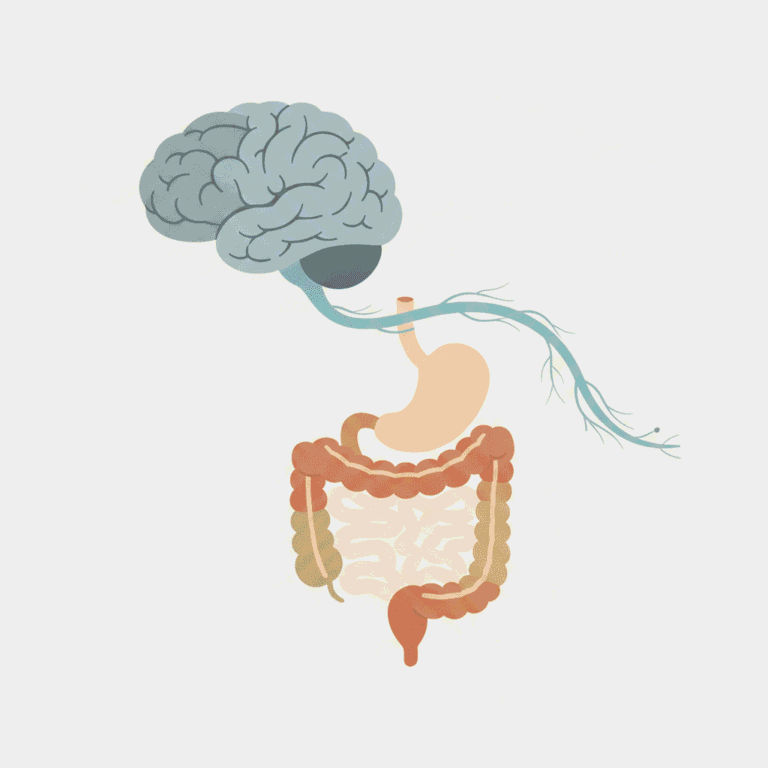
And it is physical. The reason breathing can help IBS symptoms isn’t because it “relaxes your mind.” It’s because breathing directly influences your nervous system – and your nervous system directly influences your gut.
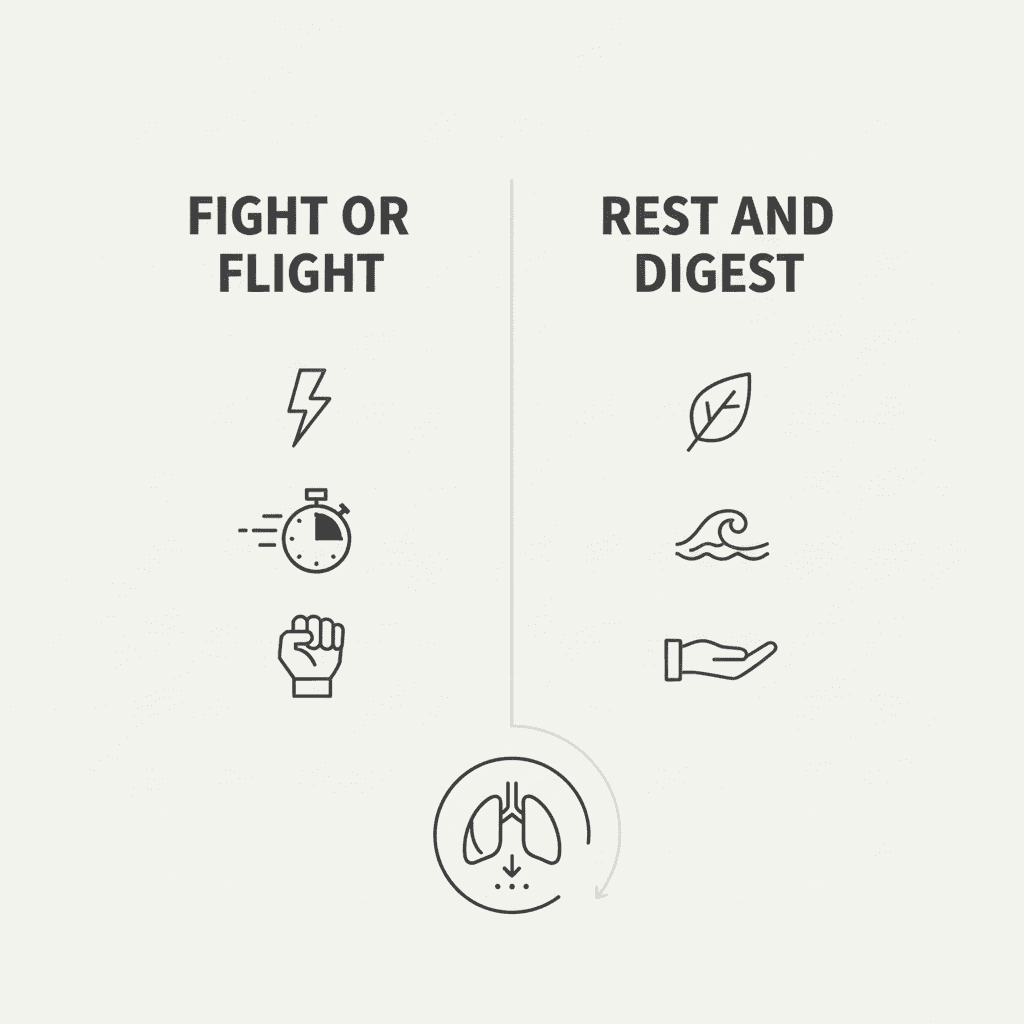
Slow, controlled breathing helps activate the parasympathetic “rest and digest” system, often through vagus-nerve pathways. That shift can reduce the intensity of stress-triggered gut symptoms for many people.
Why your breathing affects your gut
Your breathing pattern is tightly connected to your autonomic nervous system – the system that helps regulate gut motility (how fast things move), intestinal muscle contractions, sensitivity to gas and stretch, and digestive “readiness.”
When stress is high, your system shifts toward fight-or-flight. In IBS, that shift can show up as urgency, cramping, bloating, or even constipation. For a mainstream overview of IBS and how stress can interact with symptoms, see the NIDDK resource: Irritable Bowel Syndrome.

What is diaphragmatic breathing?
Diaphragmatic breathing (also called “belly breathing”) uses your diaphragm – a large muscle under your lungs – rather than shallow chest breathing.
Shallow breathing often pairs with tension. Slow diaphragmatic breathing helps signal safety and supports a more regulated digestive state. Johns Hopkins has an accessible IBS overview that includes the role of stress management: Irritable Bowel Syndrome (IBS).
The 5-minute IBS breathing protocol
You don’t need an hour. You don’t need anything fancy. You need 5 minutes and consistency.
Step 1: Position
- Sit upright or lie down.
- Uncross your legs, unclench your jaw, and drop your shoulders.
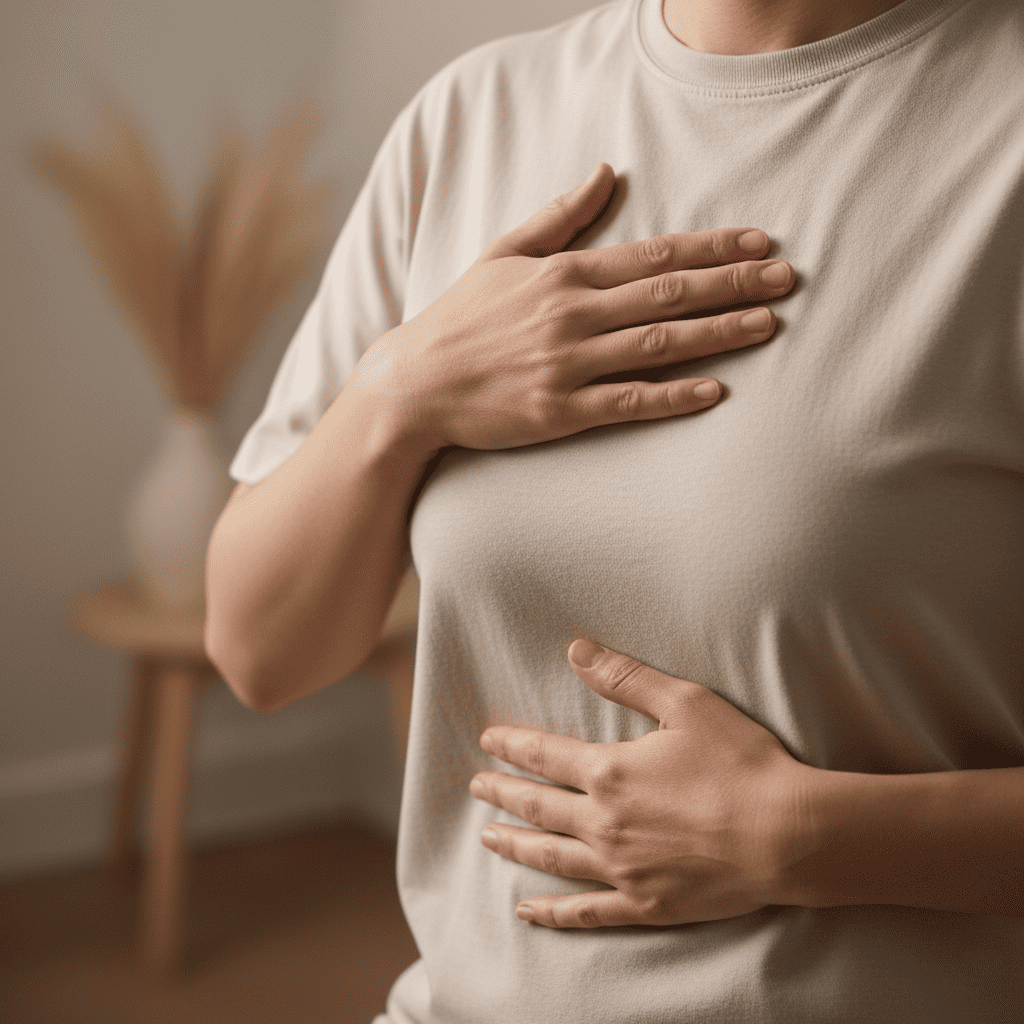
- Place one hand on your chest and one on your abdomen.
- Your goal: the bottom hand moves more than the top one.
Step 2: Inhale (about 4 seconds)
- Breathe in slowly through your nose for ~4 seconds.
- Let your abdomen expand gently.
- Aim for “soft expansion,” not forcing.
Step 3: Longer exhale (6–8 seconds)
- Exhale slowly through your nose or mouth.
- Make your exhale longer than your inhale.
- If 8 seconds feels hard, start with 6.
Step 4: Repeat for 5 minutes
- ~4-second inhale
- ~6–8-second exhale
- 2–5 minutes minimum (5 minutes is the target)
When to use it for IBS
Timing matters more than intensity. Try this breathing protocol:
- Before meals (especially if you eat while rushed)
- Before leaving the house (if urgency is a concern)
- Before high-stress events (meetings, commuting, flights)
- At the first sign of urgency
- During post-meal bloating
- At bedtime (especially if symptoms worsen at night)
For a clinical, evidence-based overview of IBS management (including behavioral approaches), the ACG guideline is a helpful reference: ACG Clinical Guideline: Management of IBS.
Why it can reduce urgency
Urgency in IBS is often linked to a mix of faster motility, heightened gut sensitivity, and nervous system overactivation. Longer exhales can help reduce threat signaling and support more coordinated gut rhythms – which may lower the intensity of urgency for many people.
Why it can reduce bloating
IBS bloating isn’t always “too much gas.” It can also involve hypersensitivity, abdominal wall tension, and poor coordination between the diaphragm and pelvic floor. Diaphragmatic breathing supports that coordination and can reduce the “tight balloon” sensation over time.
What breathing does not do
Breathing is not a cure and it won’t override every trigger. It doesn’t replace medical evaluation. What it can do is reduce nervous system amplification – and that can make symptoms more manageable.
How long until you notice a difference?
- Some people notice reduced urgency within minutes.
- Others notice fewer stress-triggered flares over 2–4 weeks.
- Consistency matters more than perfection.
A simple habit formula
Attach breathing to something you already do:
- After brushing teeth → 2 minutes
- Before the first bite of lunch → 1 minute
- Before getting in the car → 3 minutes
- Before bed → 5 minutes
Final thoughts
Five minutes sounds too simple to matter. But in IBS, small shifts in nervous system tone can mean one calmer meal, one smoother morning, or one avoided flare. Your gut responds to how safe your nervous system feels – and breathing is one of the fastest ways to signal safety.
References & further reading