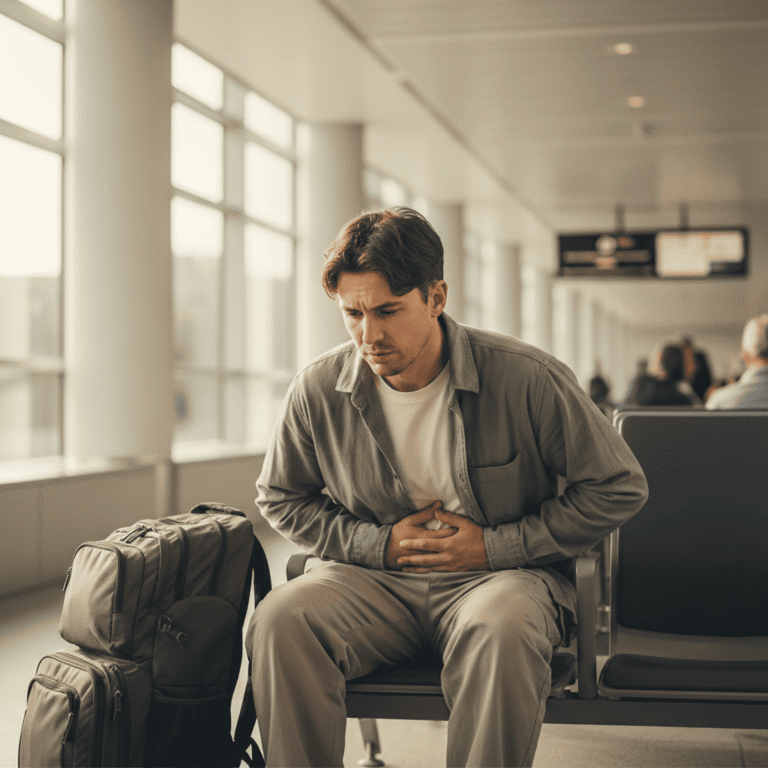
If you live with IBS, you may have noticed something frustrating: one bad night of sleep… and the next day your gut feels louder. More bloating. More urgency. More cramping. More sensitivity to food.
That connection is not coincidence. Sleep and IBS are linked through circadian rhythm timing, stress hormones (including cortisol), gut motility patterns, and the gut–brain axis. When sleep is disrupted, those systems become less coordinated – and your digestive system often pays the price.
The gut has a clock – just like your brain
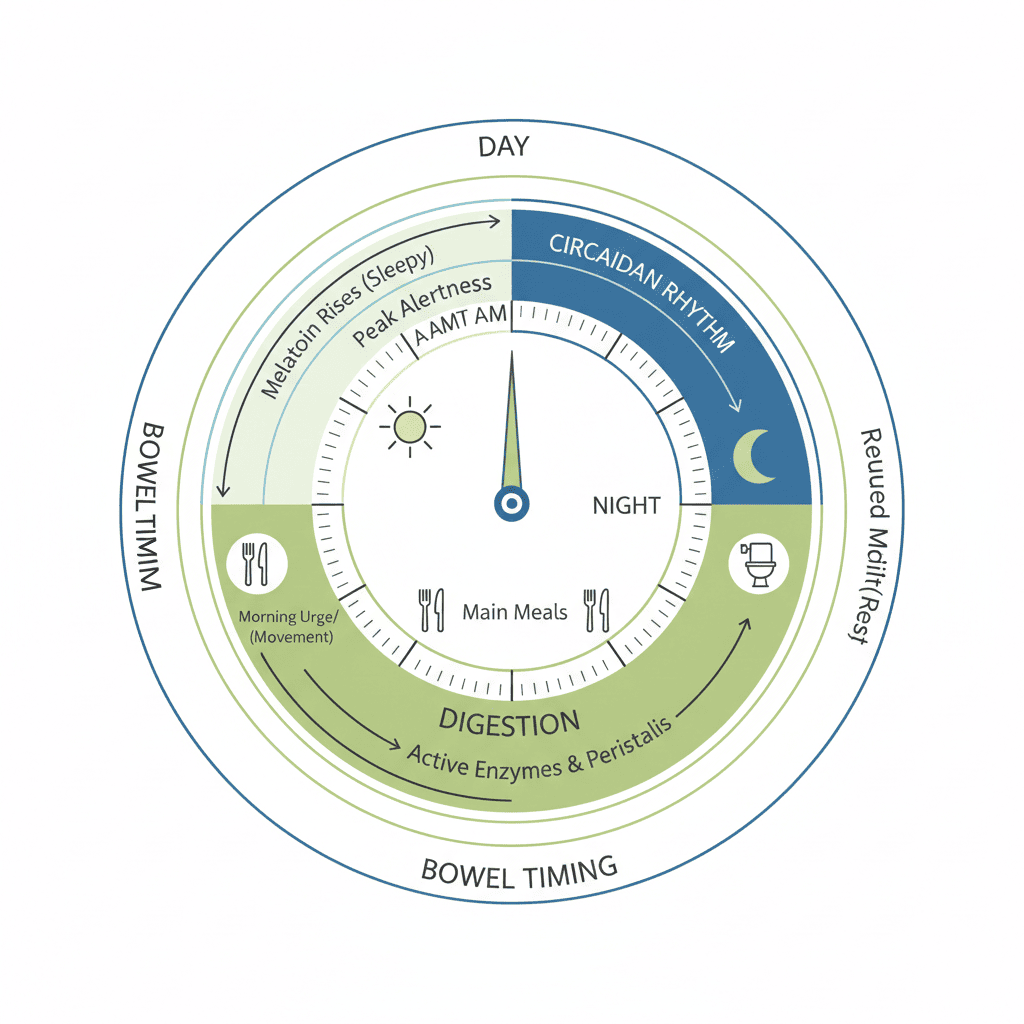
Your body runs on a 24-hour internal rhythm called the circadian rhythm. It helps regulate sleep–wake cycles, cortisol release, digestive secretions, and daily patterns of gut motility and bowel timing.
Your brain has a “master clock,” but your gut has its own peripheral clock too – which means digestion doesn’t happen randomly. It follows daily rhythms. When sleep is irregular, those rhythms can get disrupted, and IBS symptoms can flare.
For a clear overview of IBS and how multiple body systems play a role, see the NIDDK resource: Irritable Bowel Syndrome (NIDDK).

How poor sleep worsens IBS symptoms
1) Cortisol becomes less predictable
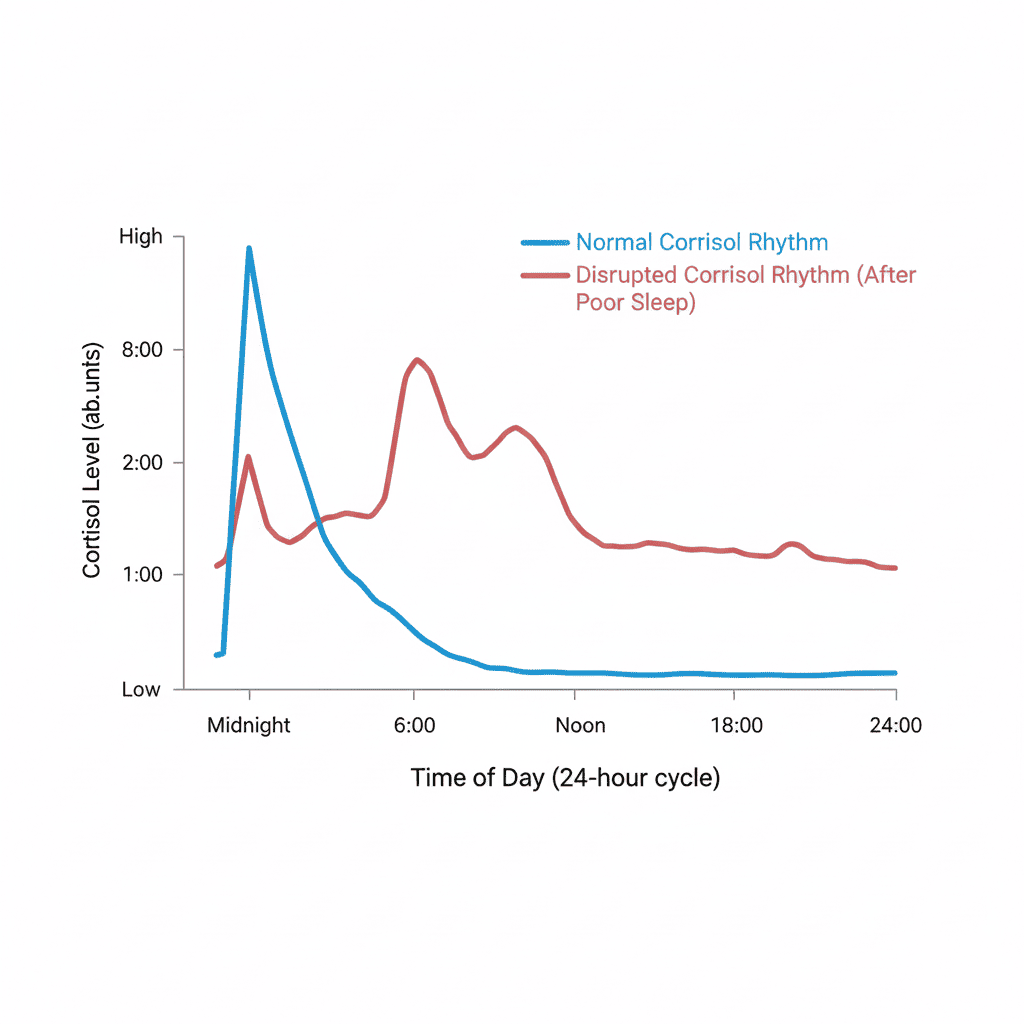
Cortisol normally follows a daily rhythm: higher in the morning to help you wake up, then tapering through the day, lowest at night to support sleep. Poor sleep can disrupt that rhythm. When cortisol becomes dysregulated, gut sensitivity and stress reactivity tend to rise – which can make IBS symptoms feel stronger the next day.
2) Pain sensitivity increases
Sleep loss lowers pain threshold. In IBS, where visceral hypersensitivity is common, that matters. A normal amount of gas or bowel pressure can feel more uncomfortable after a poor night.
3) Gut motility becomes less stable
Circadian disruption can affect motility patterns, which may lead to less predictable bowel movements. For IBS-C, poor sleep can contribute to slower transit. For IBS-D, stress-related sleep disruption can intensify urgency. The same disrupted system can push symptoms in different directions depending on your subtype and baseline pattern.
4) The gut–brain axis becomes more reactive
Sleep is when your nervous system recalibrates. Chronic sleep disruption increases sympathetic (“fight-or-flight”) tone and reduces recovery time – which can reduce resilience and make stress-triggered gut symptoms more likely.
Johns Hopkins has a helpful IBS overview that includes the role of stress and lifestyle factors: IBS overview (Johns Hopkins Medicine).
The vicious cycle: IBS → poor sleep → worse IBS
It often looks like this:
- IBS symptoms wake you up.
- You sleep poorly.
- Cortisol rhythm shifts and pain sensitivity increases.
- The next day, symptoms worsen.
- Anxiety about sleep increases, and the cycle repeats.
Breaking the cycle doesn’t require perfection – it requires small, consistent adjustments.
What actually helps (evidence-based and practical)
You don’t need a two-hour bedtime routine. You need rhythm and predictability.
1) Protect a consistent wake time (even more than bedtime)
If you change only one thing, change this: wake up at roughly the same time every day – even after a poor night. Wake time anchors your circadian rhythm and supports more stable cortisol timing the next day.
2) Get morning light within 30 minutes of waking
Light is one of the strongest signals for your circadian clock. Try 5–15 minutes of outdoor daylight in the morning. This supports healthier sleep timing and may help regulate daily digestive rhythms.
3) Reduce late-night nervous system activation
- Avoid intense work in bed.
- Limit doom-scrolling or stressful content close to bedtime.
- Keep evenings predictable when you can.
Also consider meal timing: many people feel better when dinner ends 2–3 hours before bed (when feasible).
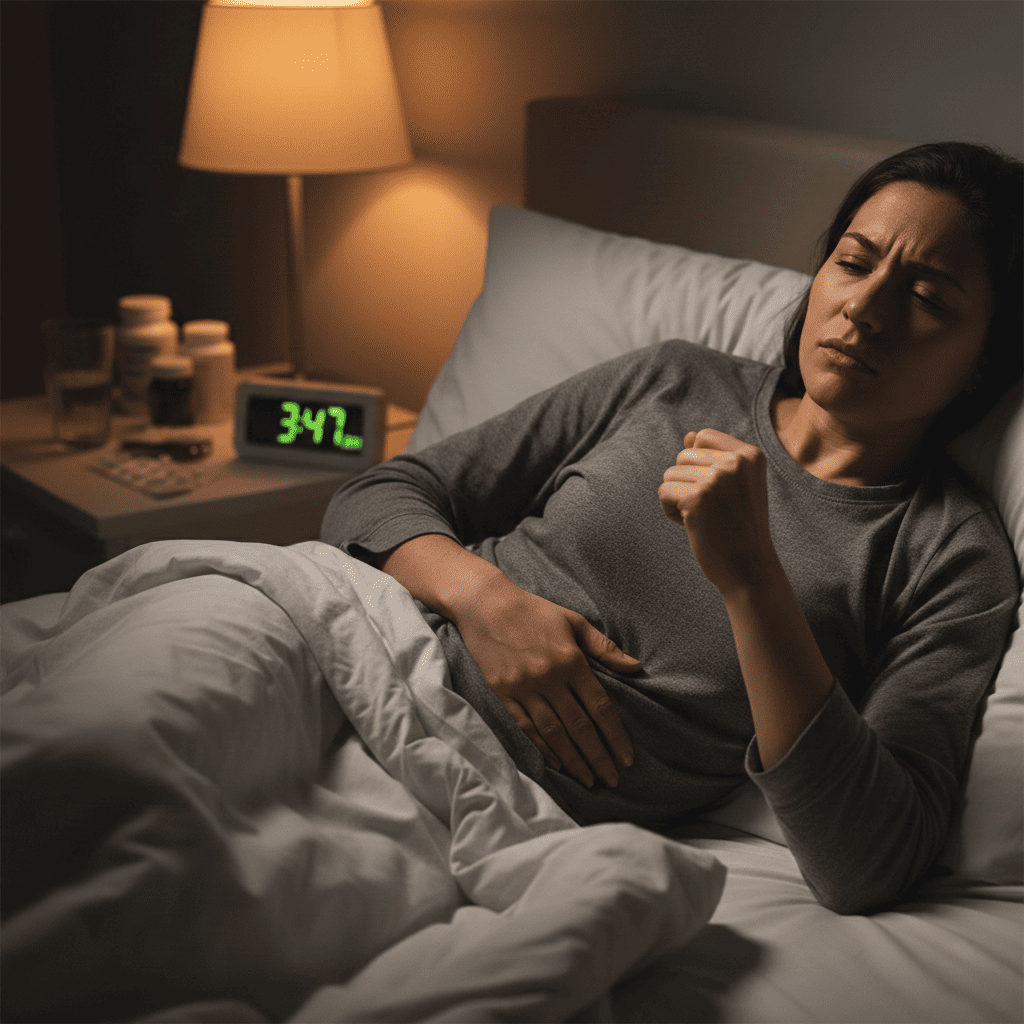
4) If you wake at 3 a.m. with symptoms
Try not to escalate the moment into panic. Instead:
- Sit upright and soften your shoulders.
- Do 2–3 minutes of slow breathing (longer exhale than inhale).
- Keep lights low.
- Remind yourself: this is a nervous system spike, not a danger signal.
5) Address pain strategically
If abdominal pain wakes you regularly, talk with your clinician about nighttime symptom management, caffeine timing, meal timing, and whether your fiber or medication timing needs adjustment.
For an evidence-based overview of IBS treatments (including medications and behavioral approaches), see the ACG guideline: ACG Clinical Guideline: Management of IBS.
How long does it take to see improvement?
- Many people notice better energy in 1–2 weeks.
- More stable bowel timing often shows up over 2–4 weeks.
- Stress reactivity tends to improve gradually with consistency.
When to talk to a doctor
Seek medical evaluation if you have frequent nighttime diarrhea, blood in stool, unexplained weight loss, or severe pain waking you nightly. IBS can affect sleep, but red-flag symptoms deserve medical review.
Final thoughts: sleep is a powerful gut stabilizer
Sleep is not just rest – it’s hormonal calibration, nervous system reset, immune regulation, and digestive rhythm stabilization. If your IBS worsens after poor sleep, your body isn’t failing. It’s responding to disrupted regulation.
Start small:
- consistent wake time
- morning light
- 5 minutes of downshift breathing
- predictable meals
Your gut loves rhythm – and sleep is one of the most powerful rhythms you can protect.
References & further reading