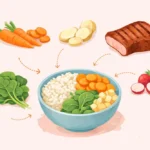
Meal prep gets recommended for IBS all the time-but if you’ve tried it, you know how it usually goes: meals feel too small, food gets boring by day three, and you’re hungry again way too quickly. On a low FODMAP plan, the challenge isn’t only avoiding triggers-it’s building meals that are digestively gentle, filling, and realistic to eat all week.
This guide gives you a 5-day low FODMAP meal prep system designed for IBS: more volume, better satiety, and less frustration. No complicated recipes. No perfection. Just a structure you can actually repeat.

Why meal prep helps IBS (when done right)
IBS flare-ups often happen when meals are skipped, rushed, or thrown together last-minute. Meal prep helps by reducing:
- Decision fatigue (“What can I eat today that won’t mess me up?”)
- Accidental high FODMAP stacking across the day
- Last-minute ultra-processed “safe foods” that don’t satisfy
Consistent meals also support more predictable digestion, steadier energy, and fewer stress-driven symptom flares-something low FODMAP research emphasizes strongly.
The core principle: build volume without triggering FODMAP overload
One of the biggest mistakes in IBS meal prep is making meals too small. Low FODMAP eating does not mean tiny portions across the board. Many foods stay low FODMAP even in generous servings.
This system is built on three pillars:
- High-volume low FODMAP vegetables
- Large portions of safe carbohydrates
- Adequate protein and fat for satiety
Step 1: Choose your base ingredients for the week
Instead of prepping full recipes, prep modular components that can be mixed and matched across meals.
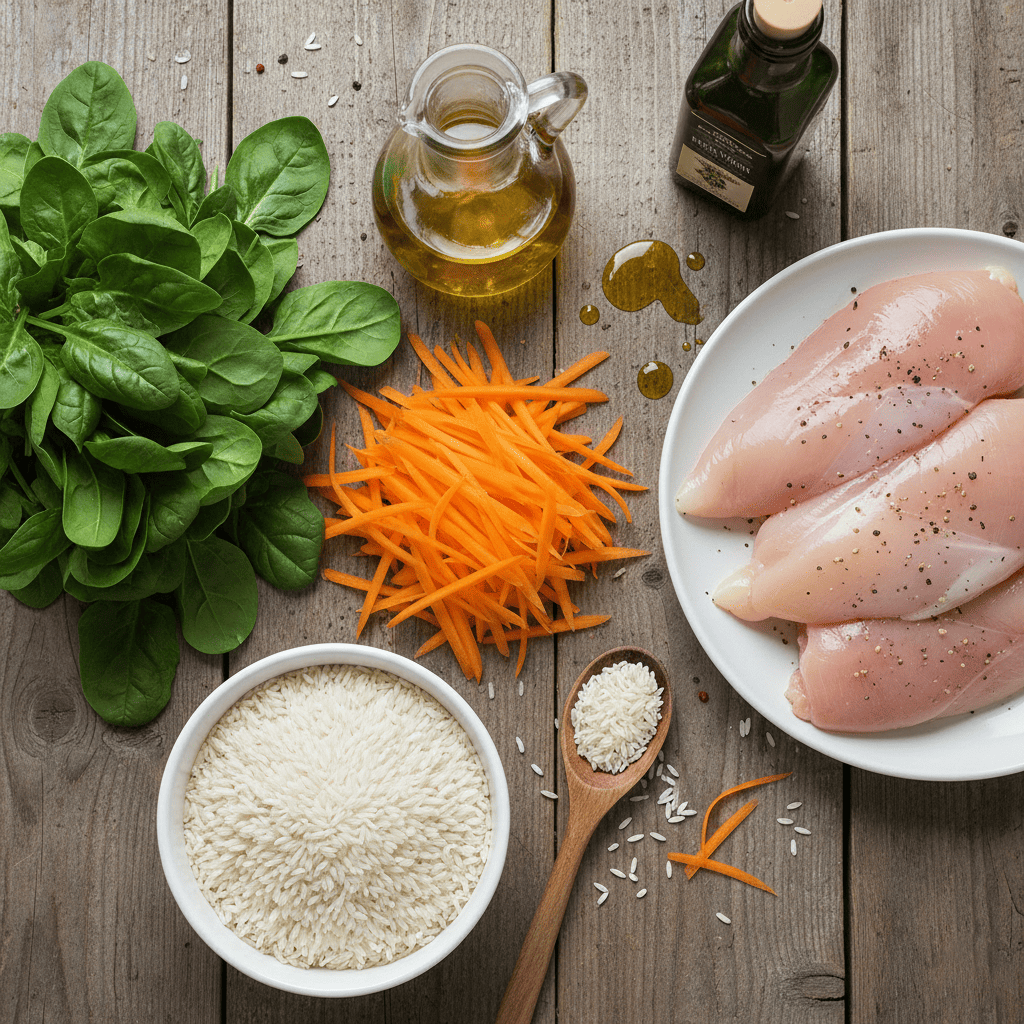
Low FODMAP vegetables for volume
These vegetables remain low FODMAP even in large cooked portions and form the backbone of filling meals:
- Carrots
- Parsnips
- Regular white potatoes
- English spinach
- Choy sum
- Collard greens
- Radishes
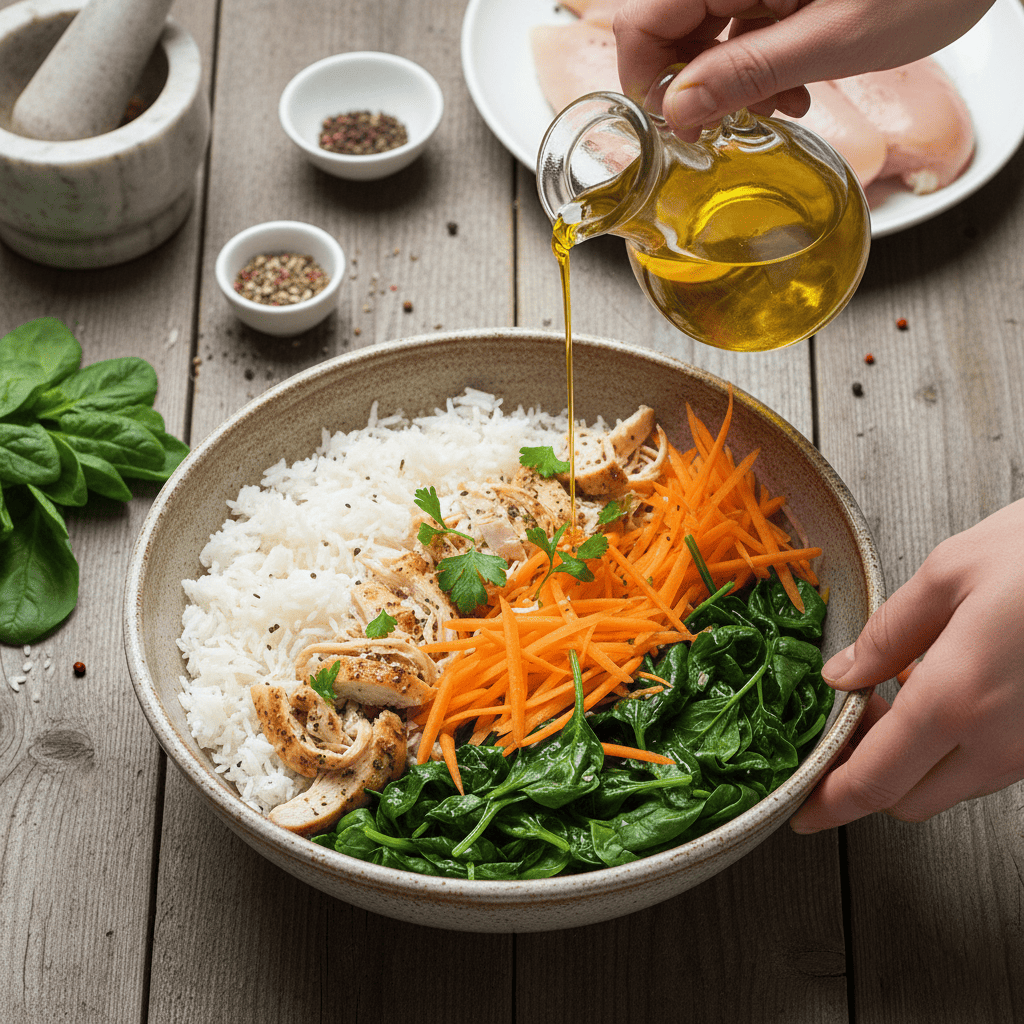
Prep tip: Roast or sauté 2–3 trays of vegetables using olive oil and salt only. Season later when assembling meals to avoid flavor fatigue.
Low FODMAP carbohydrates that actually keep you full
- White or brown rice
- Jasmine or basmati rice
- Quinoa (black or white)
- Rice noodles or rice vermicelli
- Potato-based gnocchi (rice/potato flour only)
Cook these plain in large batches so they stay flexible across different meals.
Protein: don’t underdo it
Protein is naturally low FODMAP and one of the biggest drivers of satiety. Good meal prep options include:
- Chicken thighs or breasts
- Turkey mince
- Eggs
- Firm fish like salmon or cod
- Beef or lamb with simple seasoning
Aim for slightly larger portions than you think you need-this alone reduces random snacking later.
Step 2: A simple 5-day low FODMAP meal structure
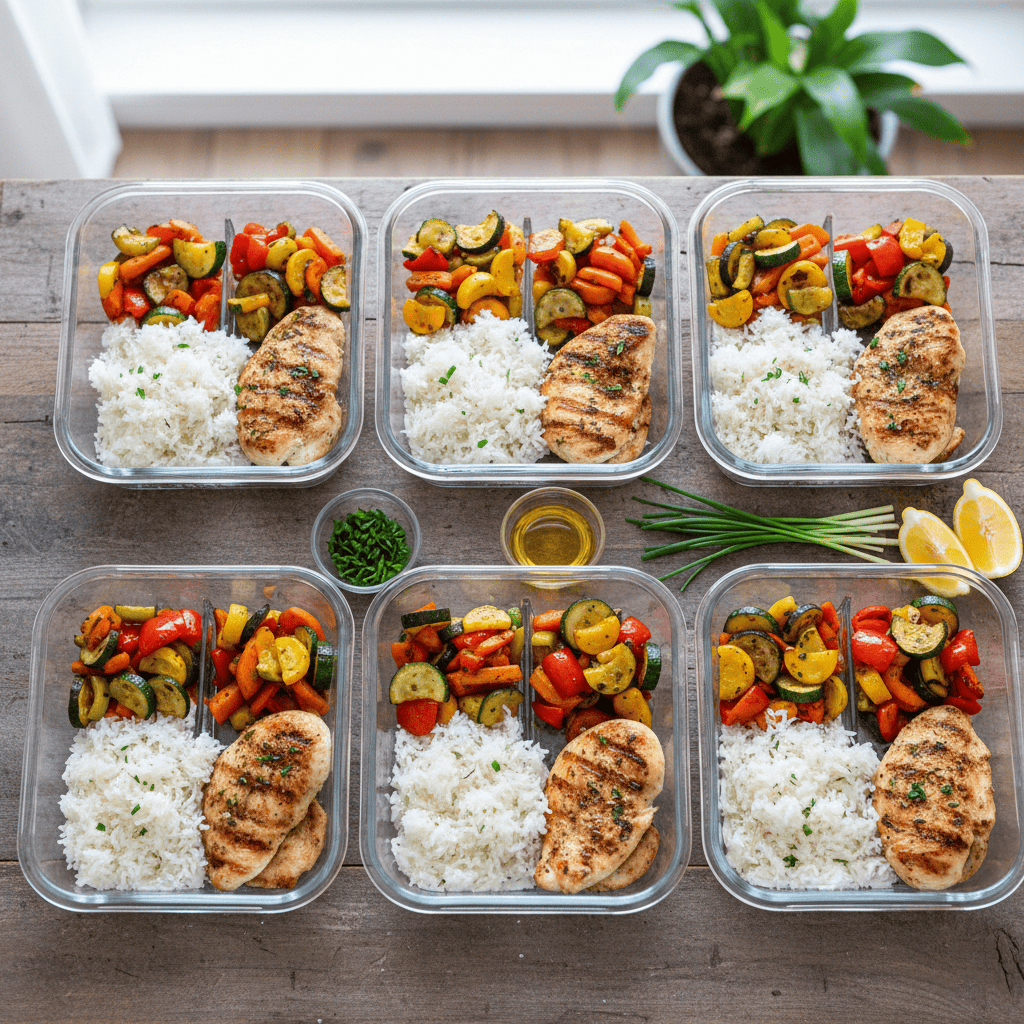
Instead of assigning exact meals to each day, use a repeatable template. Each main meal should include:
- ½ plate low FODMAP vegetables
- ¼ plate carbohydrates
- A palm-and-a-half of protein
- Added fat (olive oil, garlic-infused oil, butter)
Sample 5-day mix-and-match meals
Lunch ideas:
- Rice bowl with roasted carrots, spinach, grilled chicken, olive oil
- Quinoa salad with parsnips, cucumber, tuna, lemon dressing
- Mashed potatoes with sautéed choy sum and turkey mince
Dinner ideas:
- Rice noodles with beef, collard greens, ginger, sesame oil
- Baked salmon with roasted vegetables and rice
- Gnocchi with spinach, olive oil, parmesan, and chicken
Because everything is prepped, these meals take about 5–10 minutes to assemble.
Step 3: Prevent boredom without triggering symptoms
IBS-friendly doesn’t have to mean bland. Use low FODMAP flavor boosters like:
- Garlic-infused oil
- Fresh herbs (parsley, basil, dill)
- Citrus zest and juice
- Ginger, turmeric, smoked paprika
- Lactose-free yogurt or cream
Step 4: Snacks that support-not sabotage-your gut
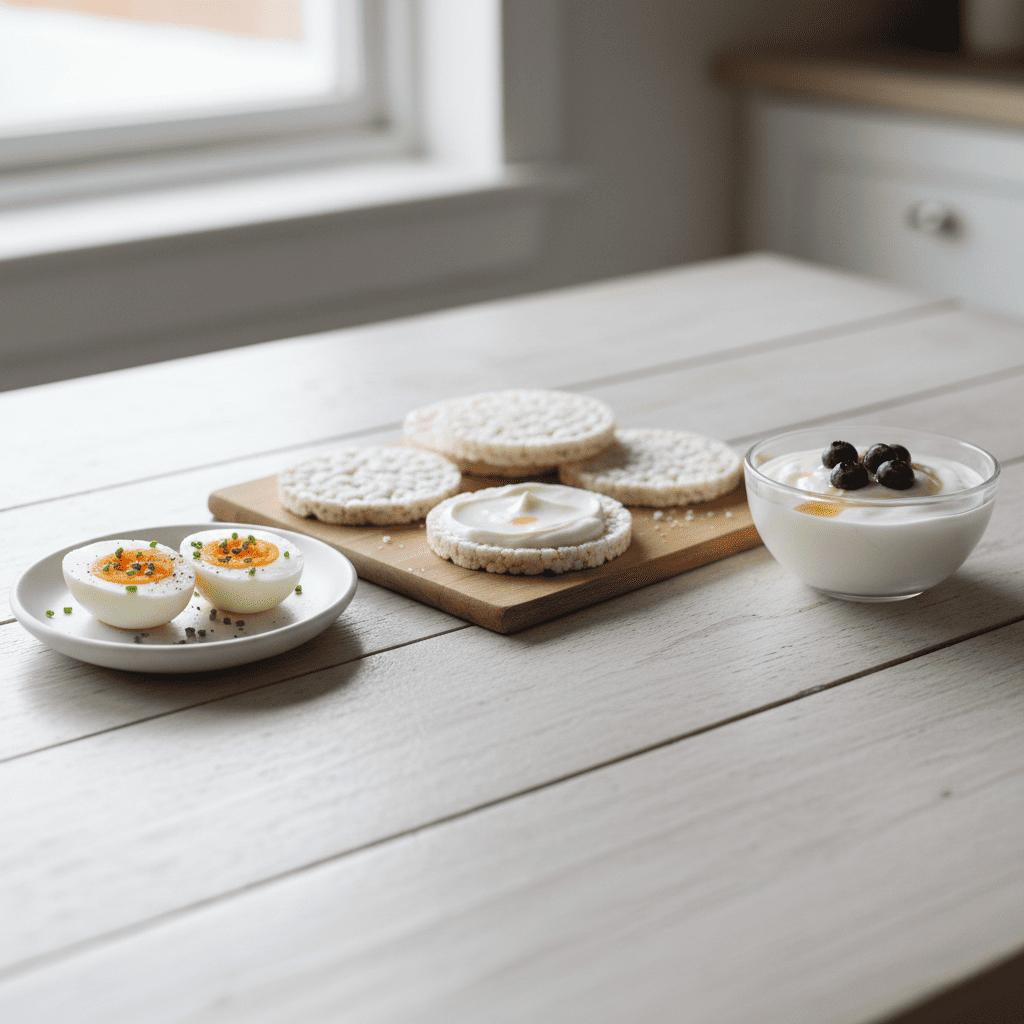
Under-eating at meals often leads to random snacking later, which can worsen symptoms. Better low FODMAP snack options include:
- Hard-boiled eggs
- Rice cakes with peanut butter
- Lactose-free yogurt with strawberries
- Leftover protein and vegetables
Common IBS meal prep mistakes to avoid
- Prepping only vegetables without carbs or protein
- Using the same seasoning on every meal
- Assuming smaller portions are always safer
- Stacking multiple moderate FODMAP foods in one meal
Final thoughts: meal prep that works with your gut
Low FODMAP meal prep should make life easier-not more restrictive. By focusing on volume-safe foods, adequate protein, and flexible assembly, you can eat generously, stay full, and reduce IBS-related stress around food.
Consistency beats perfection every time. A simple system you can repeat will always work better than chasing the “perfect” IBS diet.
References & further reading: