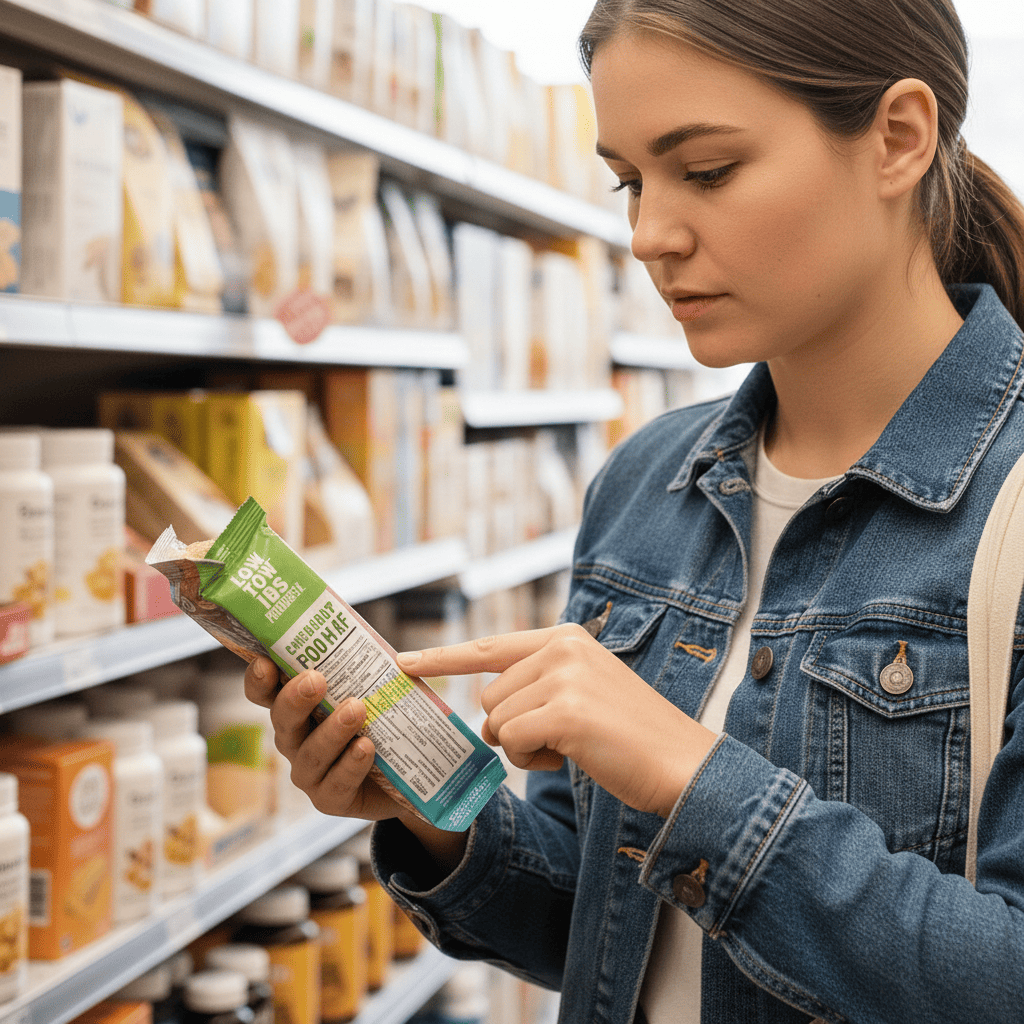
If you have IBS, reading food labels can feel like decoding a foreign language. You buy something that looks “healthy,” “natural,” or even “gut-friendly,” only to realize later that it quietly triggered bloating, pain, or urgency. The problem isn’t that you ignored the label-it’s that many FODMAPs hide behind unfamiliar names or vague wording.
This guide will help you read U.S. food labels with more confidence on a low FODMAP approach. We’ll focus on the ingredients that most often slip under the radar (especially in packaged foods), plus a simple system you can use in the aisle to avoid surprises.
Why label reading matters so much for IBS
During the low FODMAP elimination phase, symptoms often improve quickly-but packaged foods can undo that progress without you realizing why. That’s because FODMAPs don’t always show up plainly as “onion” or “garlic.” Instead, they may appear as:
Added fibers for texture or “digestive health”
Sweeteners marketed as low-calorie or “natural”
Flavor blends protected by vague labeling rules
For many people with IBS, these “hidden” ingredients are enough to trigger bloating, gas, cramping, or urgency, even when the rest of the meal looks low FODMAP.
The most common hidden FODMAPs on U.S. food labels
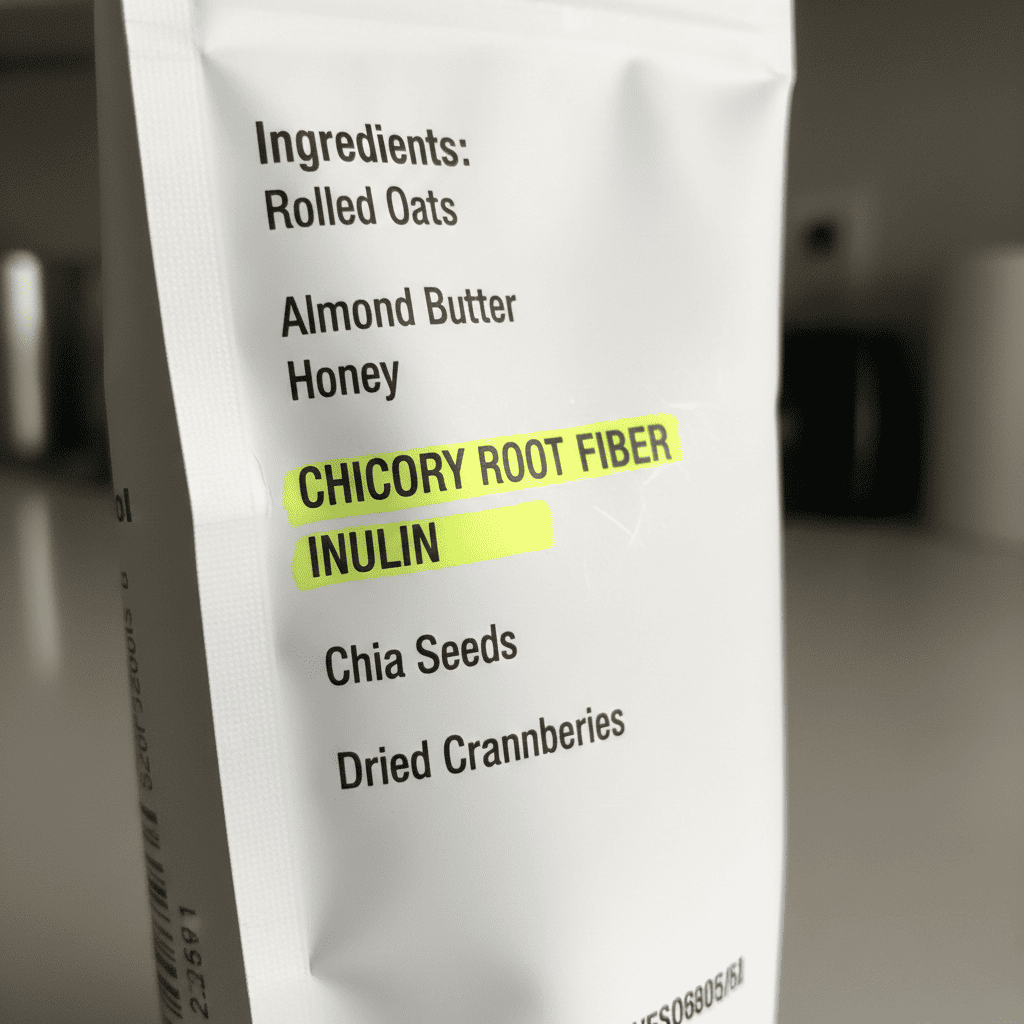
Inulin and chicory root fiber
Inulin is one of the most common IBS troublemakers in packaged foods. It’s a fructan added to boost fiber content, improve texture, or increase “prebiotic” appeal.
It may appear as:
Inulin
Chicory root fiber
Chicory root extract
Oligofructose
Common places it shows up:
Protein bars and “fiber” bars
“Gut health” snacks
Dairy-free yogurts and ice creams
Granola, cereal, and high-fiber baked goods
FOS (fructooligosaccharides)
FOS are closely related to inulin (also fructans). They’re frequently added to foods marketed as “prebiotic” or “microbiome-friendly,” but they’re typically high FODMAP and often poorly tolerated during elimination.
Look for:
Fructooligosaccharides
FOS
Oligofructose
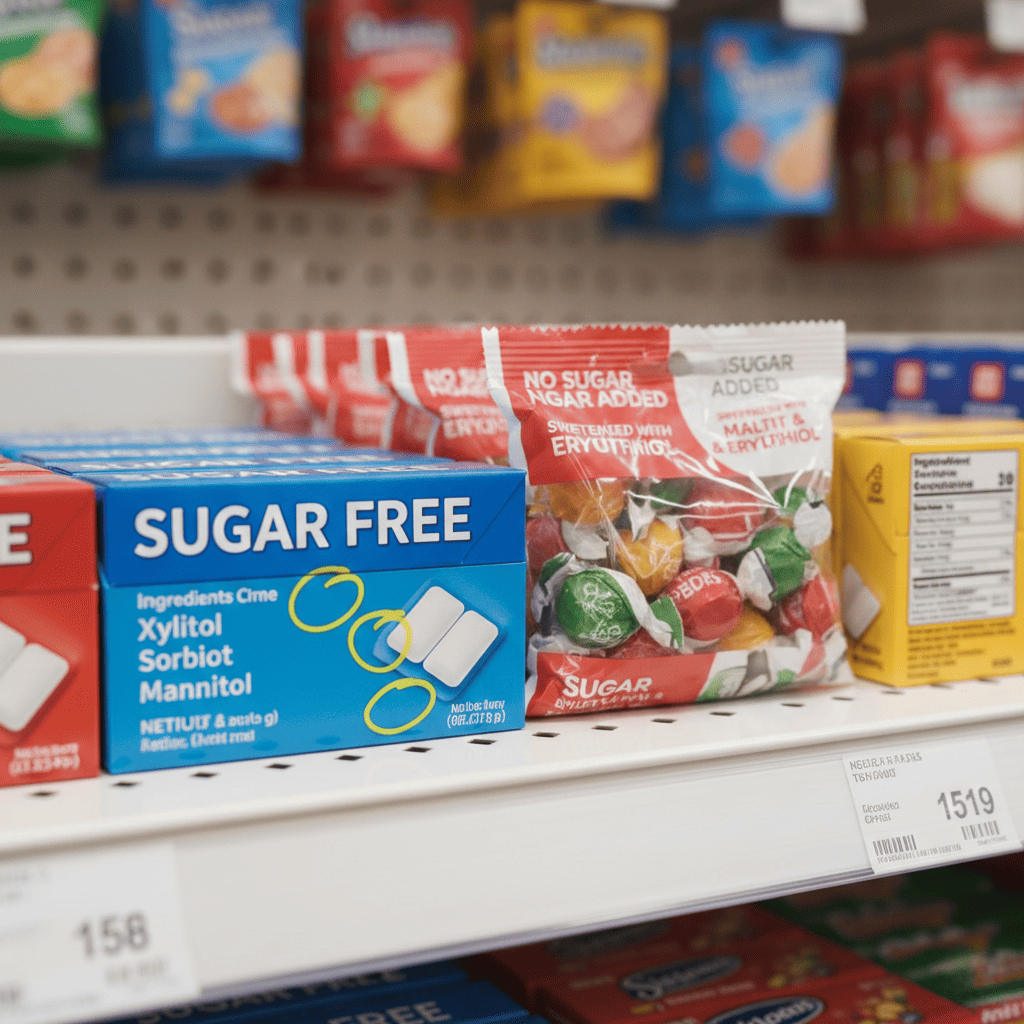
Polyols (sugar alcohols)
Polyols are sneaky because they can appear under many names, and they’re extremely common in sugar-free and “keto” products. They can worsen diarrhea, cramping, and bloating in sensitive guts.
Watch for:
Sorbitol
Mannitol
Xylitol
Maltitol
Isomalt
Erythritol (often better tolerated than others, but still problematic for some)
High-risk product categories:
Sugar-free gum and candy
“Keto” or low-carb snacks
Protein powders and protein bars
“Natural flavors” and flavor blends
In the United States, “natural flavors” is a legally defined umbrella term-and it can hide a lot. It may include flavoring compounds derived from onion or garlic without explicitly listing them. That doesn’t mean every product with “natural flavors” is a problem, but it does create uncertainty.
This matters most in:
Soups, broths, and bouillon
Savory sauces and marinades
Seasoned chips or crackers
Frozen meals
If a product contains “natural flavors” and repeatedly triggers symptoms, consider testing an alternative brand with simpler ingredients.
Syrups and concentrated sweeteners
Not all syrups are equal for IBS. Some are higher in excess fructose or concentrated sugars that can be troublesome.
Common culprits:
High-fructose corn syrup (HFCS)
Agave syrup
Honey
Often better tolerated (in reasonable portions):
Maple syrup
Table sugar (sucrose)
Rice malt syrup
HFCS is still common in U.S. packaged foods-especially in sauces, dressings, and snack foods-so it’s worth scanning for.
Ingredients that look safe-but aren’t always
Some ingredients aren’t “automatically” high FODMAP, but they can become problematic depending on the product, serving size, or how concentrated they are.
Consider the category: bars, sauces, dairy-free, and “keto” are higher-risk.
If more than one questionable ingredient shows up, it’s usually best to skip it during elimination. You can always re-test later in a structured way.
Why “healthy” or “gut-friendly” marketing doesn’t mean IBS-safe
A lot of products marketed as:
“High fiber”
“Prebiotic”
“Plant-based”
“Keto”
are designed for the general population-not for sensitive guts. For IBS, added fibers and alternative sweeteners are often the exact ingredients that trigger symptoms.
That’s why label literacy matters more than the front-of-package claims.
Final thoughts: label reading is a skill-not a failure
If you’ve ever eaten something that “should’ve been fine” and it wasn’t, that doesn’t mean you failed. It means the ingredient list was working against you.
Learning to recognize hidden FODMAPs gives you back control. Over time, label reading becomes faster, easier, and far less stressful-and that confidence alone can reduce food anxiety around IBS.