If you live with IBS, you’ve probably built a mental “suspect list” of foods: onions, garlic, dairy, coffee, spicy meals, greasy takeout. And yes — foods can absolutely trigger symptoms.
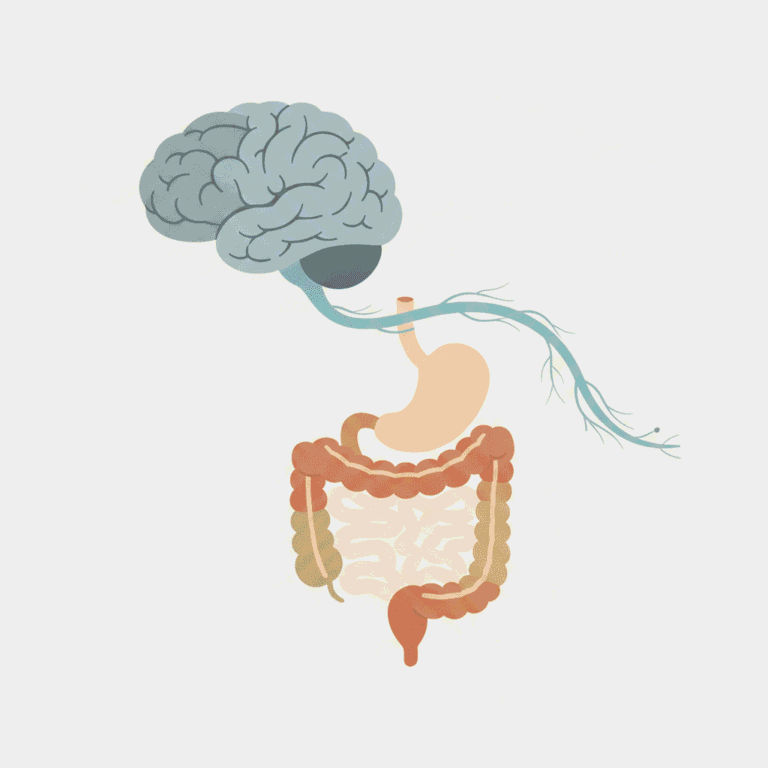
But here’s the mindset shift that changes everything: many IBS flares aren’t triggered by what you ate… they’re triggered by the state you were in when you ate it.
That’s why the same meal can feel “safe” one week and disastrous the next. It’s not always the food. Sometimes it’s the nervous system.
This is a Mind–Gut lens: IBS flare patterns often make more sense when you track trigger states (stress, fatigue, hypervigilance, feeling unsafe) alongside trigger foods.
Trigger Foods vs Trigger States: What’s the Difference?
Trigger foods are the obvious ones — ingredients that consistently irritate your digestion. In IBS, this often overlaps with fermentable carbohydrates (FODMAPs), caffeine, alcohol, very high-fat meals, or large portions.
Trigger states are internal conditions that “prime” your gut to react: stress, poor sleep, burnout, rushing, feeling trapped, feeling watched, anticipatory anxiety, or a nervous system that’s already running hot.
When your body is in a threat mode (even a subtle one), digestion changes. The gut gets more reactive. Motility shifts. Sensation amplifies. Your tolerance window shrinks.
Why IBS Can Flare Even When You’re Eating “Clean”
A classic IBS experience: you eat something “safe” — maybe rice, chicken, zucchini — and still end up bloated, cramping, or running to the bathroom.
If you’ve ever thought, “How is my gut reacting to THIS?” you’re not crazy. Here’s what can be happening:
- Your baseline stress load is high (your gut is already sensitized)
- You’re exhausted (sleep debt increases reactivity)
- You’re rushing (shallow breathing + tension changes digestion)
- You don’t feel safe (hypervigilance increases gut sensitivity)
In other words: the meal didn’t cause the flare alone — it landed on top of a nervous system that had no capacity left.
The Nervous System “Safety Signal” (The Part Most IBS Plans Ignore)
One of the most underappreciated levers in IBS is felt safety. Not “I am safe logically” — but my body feels safe.
When your system feels safe, digestion runs smoother. When it doesn’t, the gut becomes protective and reactive.
That’s why IBS often spikes with:
- Work pressure and deadlines
- Conflict (even quiet tension)
- Travel days
- Social events where you feel judged
- Situations where bathrooms feel uncertain
This is not “in your head.” It’s a body-based pattern.

A Practical Shift: Stop Asking Only “What Did I Eat?”
Food tracking can be useful, but it becomes a trap when it turns into a full-time detective job. If you only ask “what did I eat?”, you miss half the pattern.
Try asking these three questions during or after a flare:
- What state was I in? (stressed, rushed, tense, exhausted?)
- Did I feel safe? (or was I bracing for symptoms?)
- What was happening around me? (pressure, conflict, uncertainty?)
Often, the “mystery trigger” becomes obvious when you zoom out.
The IBS Tolerance Window: Why the Same Food Can Change
Think of your tolerance like a window that opens and closes.
- When you’re rested, calm, and regulated, the window is wider.
- When you’re stressed, sleep-deprived, and tense, the window is narrow.
A narrow window turns “normal” foods into triggers — because your system is already at the edge.
This is why trying to control IBS with food restriction alone often backfires: it doesn’t address the internal conditions that keep the window tight.
Trigger States You Can Actually Spot (And Track)
Here are common “state triggers” that show up again and again for IBS:
- Sleep debt (even 1–2 bad nights)
- Rushing (especially eating while rushing)
- High-cortisol mornings (wired + tense)
- Social pressure (fear of symptoms, feeling watched)
- Conflict (spoken or unspoken)
- Post-overwhelm (the “crash” after holding it together)
Tracking these alongside food gives you a more honest map of what’s happening.

What Helps: Building Nervous System Capacity (Not Just Cutting Foods)
This doesn’t mean food doesn’t matter. It means food is only one lever. If you want fewer flares, you often need two parallel strategies:
- Reduce true food triggers (without extreme restriction)
- Increase nervous system capacity (so your gut has room to tolerate life)
Simple ways to send safety signals to your body before meals:
- 90-second downshift: slow exhale breathing for 6–8 cycles
- Unclench check: soften jaw, shoulders, belly
- Eat seated: no standing, no scrolling, no rushing
- Warm start: warm tea or warm water before meals
These aren’t “woo.” They’re practical ways to change the state your digestion receives food in.
Final Thoughts: IBS Management Gets Easier When You Stop Blaming Every Bite
When you understand trigger states, you stop treating IBS like a never-ending food puzzle. And you start seeing the pattern for what it often is: a gut that reacts more when the nervous system is under strain.
Your next step doesn’t have to be another restrictive diet. It can be a more powerful question: What helps my body feel safe enough to digest?
References & Further Reading